
Your Garage Door's Biggest Enemy Might Be the Weather
When Cape Coral homeowners think about garage door problems, they usually picture a broken spring or a malfunctioning opener. But there's a slower, more persistent threat that damages garage doors throughout Southwest Florida every single day: the climate itself.
Between the year-round humidity, salt-laden air blowing in from the Gulf, and intense summer heat, your garage door endures conditions that most homeowners in other parts of the country never have to worry about. Over time, these environmental factors can corrode hardware, warp panels, degrade weatherstripping, and shorten the lifespan of your entire garage door system.
Understanding how humidity and salt air affect your garage door — and what you can do about it — is one of the smartest investments you can make as a homeowner in Cape Coral or the surrounding communities.
How Humidity Damages Garage Doors
Florida's humidity levels regularly exceed 70-80%, and during the summer months, it can feel like you're walking through a wall of moisture every time you step outside. That moisture doesn't just make you uncomfortable — it wreaks havoc on your garage door in several ways.
Metal Component Corrosion
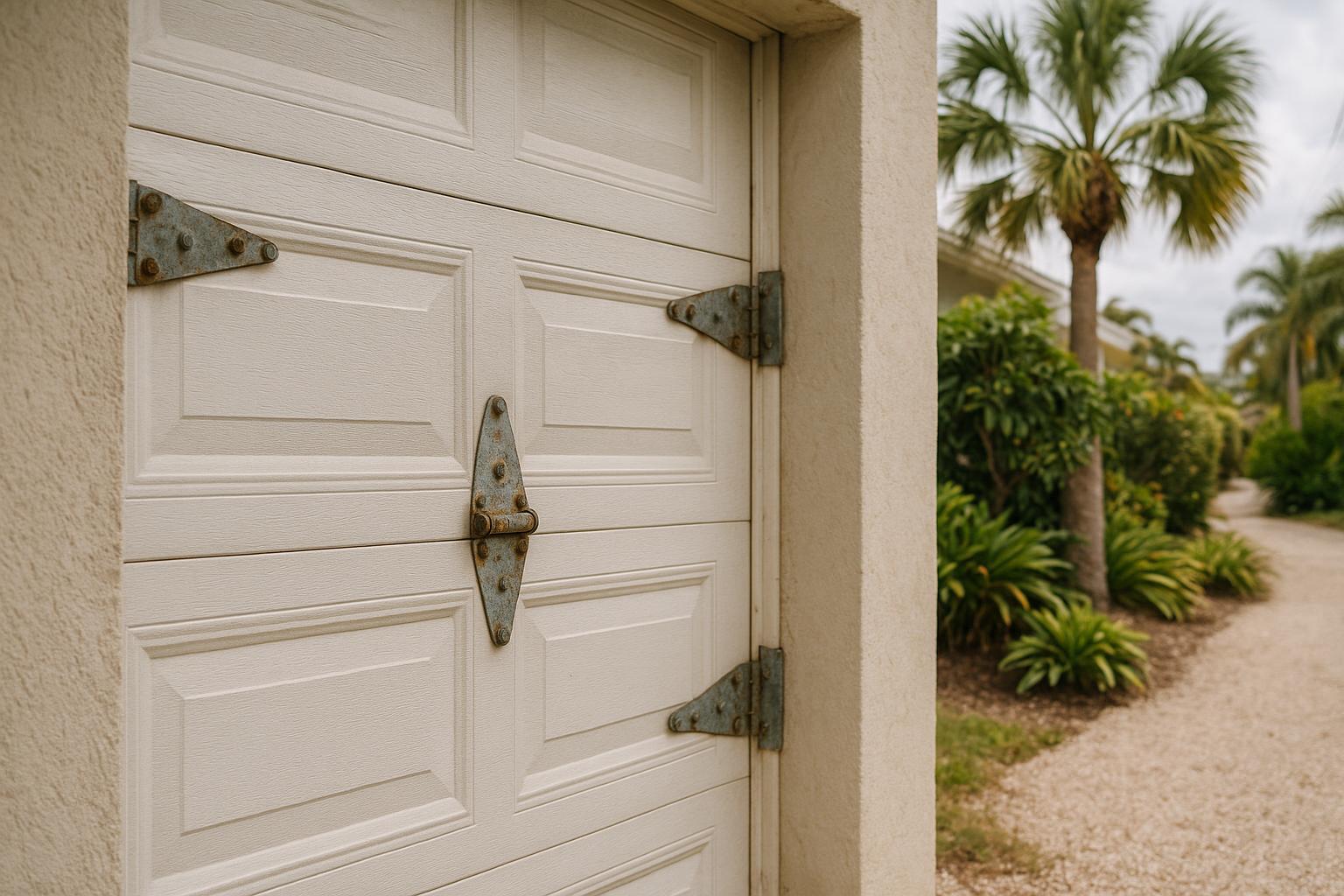
Your garage door relies on dozens of metal parts to function properly: springs, hinges, rollers, tracks, brackets, and cables. When these components are constantly exposed to high humidity, oxidation accelerates. You may notice rust forming on springs, tracks turning orange-brown, or hinges becoming stiff and difficult to move. Corroded parts don't just look bad — they become weaker and more prone to sudden failure.
Wood Panel Swelling and Warping
If you have a wooden garage door, humidity is especially problematic. Wood absorbs moisture from the air, causing panels to swell, warp, or even crack over time. A warped garage door won't seal properly against the floor, which lets in pests, rainwater, and more humid air — creating a cycle that only makes the problem worse.
Weatherstripping Deterioration
The rubber and vinyl weatherstripping along the bottom and sides of your garage door is designed to create a seal against the elements. In high-humidity environments, this material breaks down faster, becoming brittle, cracked, or moldy. Once your weatherstripping fails, your garage becomes even more vulnerable to moisture intrusion.
The Salt Air Factor
Cape Coral is surrounded by water. With the Caloosahatchee River to the north, the Gulf of Mexico to the west, and over 400 miles of canals running through the city, salt air is an unavoidable part of life here. And salt is incredibly corrosive to metal.
Accelerated Rust and Corrosion
Salt air speeds up the corrosion process dramatically compared to dry, inland climates. Even garage doors made from galvanized steel — which is coated specifically to resist rust — will eventually succumb to salt air exposure. Homes closer to the water tend to see corrosion develop faster, but no property in the area is truly immune.
Damage to Garage Door Openers
It's not just the door itself that suffers. Your garage door opener contains circuit boards, wiring, and metal gears that can all be affected by salt-laden moisture in the air. Corroded electrical connections can cause intermittent operation, while rusted internal components can lead to grinding noises and eventual motor failure.
Impact on Gate Systems
If you also have an automated gate on your property, the same salt air corrosion applies — often even more severely since gates are fully exposed to the outdoor elements with no overhead protection. Regular maintenance becomes essential for both your garage door and gate systems in coastal areas.
How to Protect Your Garage Door from the Elements
The good news is that with proactive care, you can significantly extend the life of your garage door, even in Cape Coral's demanding climate. Here are the most effective strategies:
Choose the Right Materials
- Aluminum doors are naturally resistant to rust and perform exceptionally well in coastal environments.
- Fiberglass and vinyl doors won't corrode at all, making them excellent choices for homes near the water.
- Steel doors with a baked-on polyester finish offer good durability, but they need regular inspection for chips or scratches where rust can start.
If you're considering a new garage door installation, choosing a material suited to our local climate is one of the most important decisions you'll make.
Lubricate Metal Components Regularly
Applying a silicone-based lubricant to your springs, hinges, rollers, and tracks every three to four months creates a protective barrier against moisture. Avoid using WD-40 as a long-term lubricant — it's great for loosening stuck parts, but it evaporates quickly and doesn't provide lasting protection.
Rinse Your Door Periodically
It might sound simple, but rinsing your garage door with fresh water every few weeks helps wash away salt deposits before they cause damage. Use a garden hose and a mild detergent a few times a year for a more thorough cleaning. Pay attention to the bottom panels and hardware where salt and grime tend to accumulate.
Inspect and Replace Weatherstripping
Check your bottom seal and side weatherstripping at least twice a year. If you notice cracks, gaps, or sections that have pulled away from the door, replace them promptly. Fresh weatherstripping keeps moisture out of your garage and helps your air conditioning work more efficiently — a real benefit during our long, hot summers.
Schedule Professional Maintenance
A professional maintenance visit goes far beyond what most homeowners can do on their own. A trained technician will inspect every component of your garage door system, identify early signs of corrosion or wear, adjust tension and alignment, and apply professional-grade lubricants and protective coatings. For homes in Southwest Florida, we recommend scheduling maintenance at least once a year — ideally before hurricane season begins in June.
Warning Signs You Shouldn't Ignore
Even with regular care, the Florida climate can still take its toll. Watch for these red flags that indicate your garage door needs professional attention:
- Visible rust on springs, tracks, or brackets
- Grinding or squealing noises when the door operates
- The door feels heavier than usual when you lift it manually
- Uneven movement or the door getting stuck partway
- Flaking or bubbling paint on steel door panels
- Your opener struggles or operates inconsistently
Catching these issues early can mean the difference between a minor repair and a costly full replacement.
Keep Your Garage Door Ready for Whatever Florida Throws at It
Living in Cape Coral comes with incredible benefits — beautiful waterways, warm weather, and a relaxed lifestyle. But it also means your home's exterior components work harder than they would almost anywhere else in the country. Your garage door is no exception.
By choosing the right materials, staying on top of basic maintenance, and scheduling regular professional inspections, you can keep your garage door looking great and functioning reliably for years to come.
At Cape Coral Garage & Gate, we understand the unique challenges that our local climate presents. Whether you need a maintenance tune-up, hardware replacement, or a brand-new garage door built to handle salt air and humidity, our team is here to help homeowners across Cape Coral, Fort Myers, Lehigh Acres, Estero, Bonita Springs, and the surrounding areas. Give us a call today to schedule a service visit and protect your investment.