
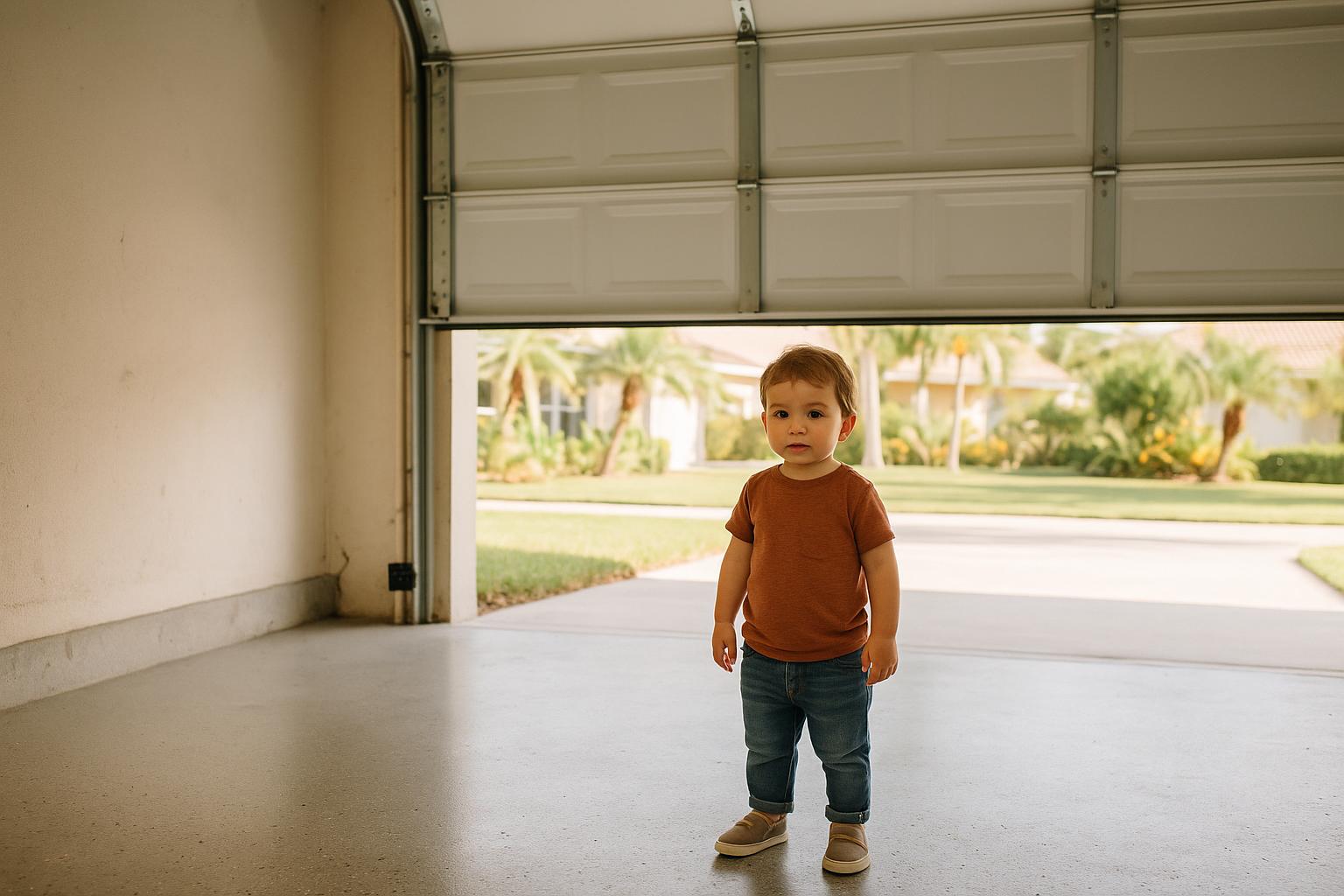
Your Garage Door Is a Safety Risk Most Parents Overlook
When parents think about childproofing their homes, they usually focus on cabinet locks, outlet covers, and baby gates. But there's one major hazard that often gets overlooked — the garage door. It's the largest and heaviest moving object in most homes, weighing anywhere from 130 to over 400 pounds depending on the material and size.
For families in Cape Coral, the garage often doubles as a play area, storage space, or workshop, which means kids are around it more than you might realize. Whether your children are toddlers or teenagers, taking a few deliberate steps to childproof your garage door can prevent serious injuries and give you peace of mind.
Understand the Risks
Garage doors move with significant force. A closing door that encounters a child in its path can cause crushing injuries, broken bones, or worse. Beyond the door itself, there are other dangers lurking in the garage door system:
- Torsion and extension springs are under extreme tension and can cause injury if tampered with.
- Pinch points between door panels can catch small fingers as the door moves.
- Wall-mounted openers and buttons placed too low can tempt curious toddlers to press them repeatedly.
- Remote controls left within reach can become toys that open and close the door unexpectedly.
Understanding these risks is the first step toward making your garage a safer environment for your family.
Test Your Auto-Reverse Feature
Every garage door opener manufactured after 1993 is required by federal law to include an auto-reverse mechanism. This feature forces the door to reverse direction if it contacts an object — or a person — while closing. But just because your opener has this feature doesn't mean it's working properly.
Here's a simple test you can do right now:
- Place a 2x4 board flat on the ground in the center of the door's path.
- Press the button to close the garage door.
- When the door contacts the board, it should immediately reverse direction and open back up.
If the door doesn't reverse, or if it hesitates before reversing, your opener needs adjustment or repair. This is one of the most critical safety features protecting your family, and it should be tested at least once a month.
Check Your Photo-Eye Sensors
In addition to the mechanical auto-reverse, modern garage door openers use photo-eye sensors mounted near the bottom of the door tracks on either side. These sensors project an invisible beam across the door opening. If anything breaks that beam while the door is closing, the door automatically reverses.
These sensors can become misaligned, dirty, or damaged over time — especially here in Southwest Florida where humidity, insects, and debris are constant factors. To check them:
- Make sure both sensor lights are lit and steady (usually one green, one amber).
- Clean the lenses with a soft cloth to remove dust, cobwebs, or grime.
- Ensure nothing is blocking the sensors, including storage items or yard tools leaning nearby.
If your sensors are flickering or not lighting up at all, it's time to call a professional to realign or replace them.
Move the Wall Button Out of Reach
The wall-mounted garage door button should be installed at least five feet from the floor — high enough that small children can't reach it. If your button is mounted lower than that, consider having it relocated. This is a quick and inexpensive fix that removes a major temptation for curious kids.
Also, make it a household rule that children should never press the wall button unless a parent is present and watching the door's full travel path.
Secure Your Remote Controls
Garage door remotes are small, button-covered devices that are irresistible to young children. If left on a counter, coffee table, or in a car's center console within reach, kids may treat them like toys.
To reduce this risk:
- Store remote controls in a high or locked location when not in use.
- Use a keychain remote that stays on your car keys rather than a standalone clicker.
- If your opener supports smartphone control, consider switching to an app-based system where access is password-protected.
Teach Garage Door Safety Rules
Once your children are old enough to understand basic safety instructions, establish clear rules about the garage door:
- Never stand, walk, or run under a moving garage door.
- Never touch the tracks, springs, or cables. These components are under high tension and should only be handled by trained technicians.
- Never try to race the door. Kids sometimes try to dash under a closing door, which is extremely dangerous.
- Always watch the door until it fully closes or opens. Walking away while the door is in motion means no one is watching for problems.
Having these conversations regularly — not just once — helps reinforce safe habits as your children grow.
Schedule Regular Maintenance
A well-maintained garage door is a safer garage door. Over time, components wear down, springs lose tension, and safety features can stop functioning correctly. Scheduling annual or semi-annual maintenance with a qualified technician ensures that everything is in proper working order.
During a maintenance visit, a technician will typically:
- Test the auto-reverse and photo-eye sensors
- Inspect springs, cables, rollers, and hinges for wear
- Lubricate moving parts to ensure smooth operation
- Check the balance of the door
- Tighten hardware and make necessary adjustments
For Cape Coral homeowners, regular maintenance is especially important because the local climate accelerates wear on metal components. Catching a problem during a routine inspection is far better than discovering it when something fails unexpectedly.
Consider Upgrading an Older Opener
If your garage door opener is more than 15 to 20 years old, it may lack the safety features that are standard on newer models. Older openers may not have photo-eye sensors, reliable auto-reverse mechanisms, or rolling-code technology that prevents remote signal theft.
Upgrading to a modern opener gives you access to features like:
- Battery backup so the door operates during power outages
- Smartphone monitoring and control
- Timer-to-close functions that automatically shut the door after a set period
- Motion-activated lighting for better visibility
These features aren't just convenient — they add meaningful layers of safety for families with children.
Keep Your Family Safe
Childproofing your garage door doesn't require a major renovation. Most of these steps are simple, affordable, and can be done in a single afternoon. But for anything involving springs, cables, sensors, or opener systems, it's always safest to work with a professional.
At Cape Coral Garage & Gate, we help families across Cape Coral, Fort Myers, and the surrounding Southwest Florida area make sure their garage doors are safe, reliable, and up to current standards. Whether you need a sensor repair, an opener upgrade, or a full maintenance inspection, we're here to help you protect what matters most.