
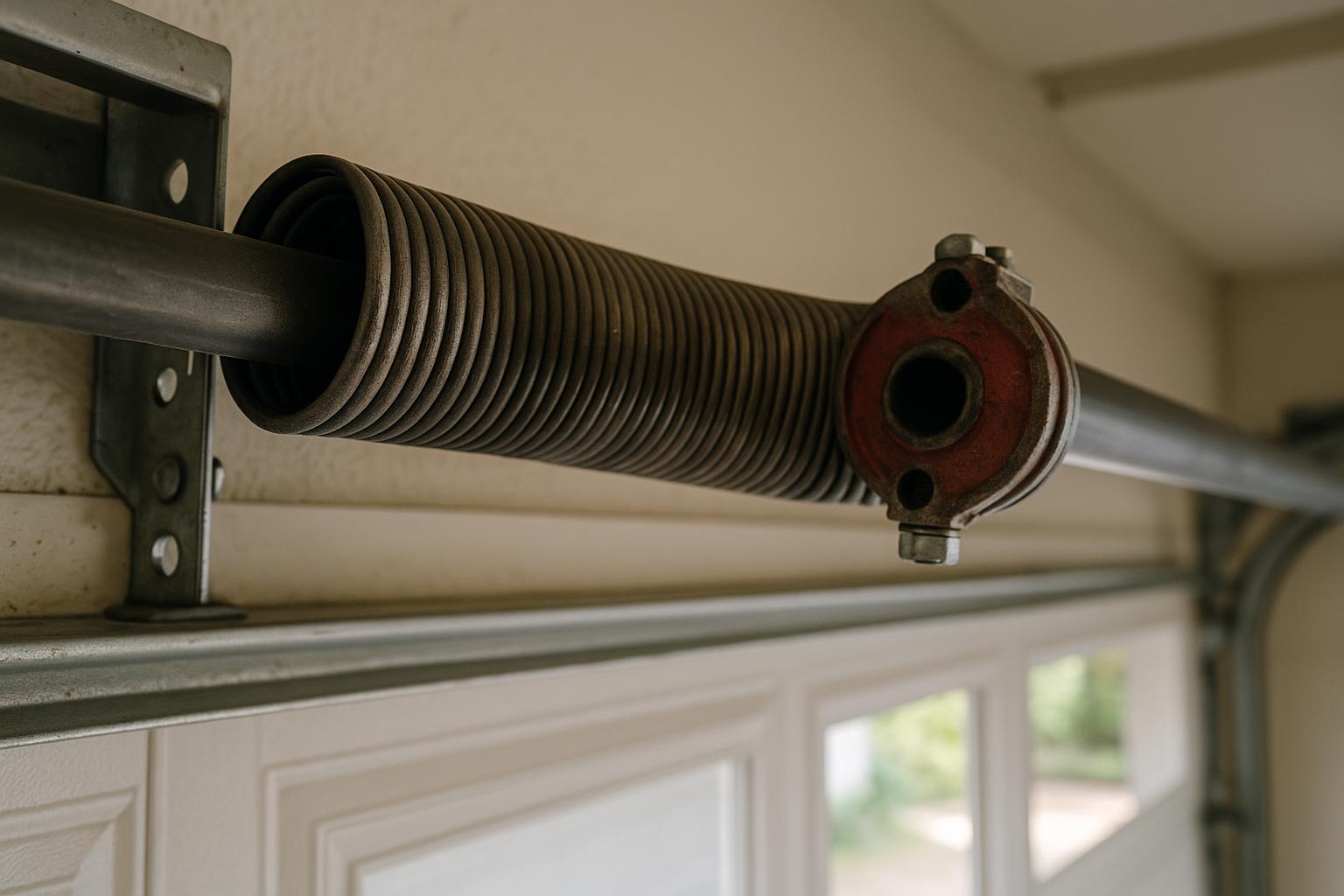
Your Garage Door Springs Are Working Harder Than You Think
Every time you open or close your garage door, a set of heavy-duty springs does the real heavy lifting. These tightly wound components bear the full weight of the door — often 150 to 250 pounds or more — and cycle thousands of times over their lifespan. Yet most homeowners in Cape Coral never think about their garage door springs until something goes wrong.
The problem is that when a spring fails, it usually fails dramatically. A snapping spring can sound like a gunshot, leave your door stuck in place, and even pose a safety risk. The good news? Springs almost always give warning signs before they break. Knowing what to look for can help you schedule a replacement on your terms instead of dealing with an emergency.
How Long Do Garage Door Springs Last?
Most standard garage door springs are rated for approximately 10,000 cycles. One cycle equals one full open and one full close. If your household opens and closes the garage door four times a day, that works out to roughly seven years of use before the springs reach the end of their expected life.
However, several factors can shorten that lifespan, especially here in Southwest Florida:
- Humidity and salt air: Cape Coral's coastal climate accelerates corrosion on metal components, including springs. Rust weakens the coils and can cause premature failure.
- Lack of maintenance: Springs that aren't periodically lubricated and inspected wear out faster.
- Improper spring size: If a previous installation used springs that weren't properly matched to your door's weight, they'll be under extra stress every cycle.
If your garage door is approaching the seven-year mark or older, it's worth paying closer attention to how it's performing.
Warning Signs Your Springs Are Wearing Out
1. The Door Feels Heavier Than Usual
Try this simple test: pull the emergency release handle to disconnect the door from the opener, then manually lift the door about halfway. A properly balanced door with healthy springs should stay in place on its own. If the door feels extremely heavy, slides back down, or is difficult to lift, your springs are losing tension and struggling to support the weight.
2. The Door Opens Slowly or Unevenly
When springs begin to weaken, you may notice the door rising more slowly than it used to. If you have a two-spring system and one spring is weaker than the other, the door may rise crookedly — one side lifting faster than the other. This uneven movement puts extra strain on the tracks, rollers, and opener.
3. You Hear Loud Squeaking or Grinding
While some operational noise is normal, excessive squeaking, grinding, or popping sounds during operation can indicate that the spring coils are binding, corroded, or losing their structural integrity. Don't ignore new or worsening noises — they're often the first audible clue that something is deteriorating.
4. Visible Gaps in the Spring Coils
Take a look at your torsion spring, which is the long spring mounted horizontally above the door. A healthy spring has tightly wound coils with uniform spacing. If you see a visible gap or separation in the coils, the spring has already partially failed and could snap at any time. This is one of the clearest visual indicators that replacement is needed immediately.
5. The Opener Is Straining
Your garage door opener is designed to guide the door, not lift it. When springs weaken, the opener has to work much harder to compensate. You might notice the motor running louder, the door stalling partway up, or the opener overheating and shutting off. Continuing to run the opener under these conditions can burn out the motor entirely, turning a spring replacement into a much more expensive repair.
6. Rust on the Springs
Given Cape Coral's humid, salt-tinged air, rust is a common issue on garage door hardware. Corroded springs are weaker springs. If you can see visible rust or pitting on the coils, the metal is compromised and the spring is more likely to break without warning.
Why You Shouldn't Wait for a Spring to Break
It's tempting to adopt the "if it ain't broke, don't fix it" approach, but with garage door springs, that strategy can backfire in several ways:
- Safety hazard: A snapping torsion spring releases an enormous amount of stored energy. While modern safety cables help contain the spring, the force involved can damage nearby objects and is dangerous to anyone standing close by.
- You'll be locked out — or in: A broken spring typically means your garage door won't open. If your garage is your primary entry point, you could be stuck until a technician arrives.
- Secondary damage: When one spring breaks, the sudden imbalance can damage your tracks, cables, drums, and opener. What could have been a straightforward spring replacement turns into a multi-component repair.
- Emergency service costs more: Scheduling a planned spring replacement is almost always less expensive than an emergency call when you're stuck with a non-functioning door.
Can You Replace Garage Door Springs Yourself?
This is one of the most common questions homeowners ask, and the answer is a strong recommendation against it. Garage door springs — especially torsion springs — are under extreme tension. Improper handling can result in serious injury. Professional technicians have the specialized tools, training, and experience to safely remove old springs and install correctly sized replacements.
Additionally, a professional can assess whether both springs should be replaced at the same time. If your door uses a two-spring system and only one has failed, the other is likely close behind. Replacing both at once ensures balanced performance and saves you from a second service call in the near future.
Keep Your Springs Healthy Longer
While springs will eventually wear out no matter what, regular maintenance can extend their life significantly:
- Lubricate the springs every few months with a silicone-based garage door lubricant. This reduces friction, prevents rust, and keeps the coils operating smoothly.
- Schedule annual inspections. A trained technician can measure spring tension, check for early signs of wear, and catch small problems before they become big ones.
- Address balance issues promptly. If the door ever seems off-balance or harder to operate, don't ignore it. Early intervention protects both the springs and the rest of the door system.
When It's Time, Cape Coral Garage & Gate Is Here to Help
If you've noticed any of the warning signs described above, don't wait for a dramatic failure. The team at Cape Coral Garage & Gate provides fast, professional spring replacement services throughout Cape Coral, Fort Myers, Lehigh Acres, and the surrounding Southwest Florida area. We'll assess your springs, recommend the right replacement, and get your door operating safely and smoothly — usually in a single visit.
Whether your springs are showing early signs of wear or have already snapped, give us a call. We're here to keep your garage door working the way it should, so you can get on with your day without worrying about what's happening overhead.