
The Moment You Notice It
You're backing the car out, or maybe you're standing in the garage grabbing the hose, and the door comes down a little too fast, with a shudder instead of a smooth glide. Or you notice there's no little box with a blinking light near the floor track — no photo-eye sensor at all. Or the springs overhead are just... springs, no cable running through them, nothing to catch them if one lets go. Suddenly you're googling things on your phone while your spouse says, "It's worked fine for thirty years, leave it alone," and you're saying, "We need a whole new door, now."
You're both a little right. An old door isn't automatically dangerous, and it isn't automatically fine either. The trick is knowing which parts are genuine safety issues and which parts are just... old.
What's Actually a Safety Issue
No Auto-Reverse or Photo-Eye Sensors
If your opener doesn't stop and reverse when something blocks the door's path, and there are no photo-eye sensors mounted a few inches off the floor on either side of the track, that's not a style preference — it's a real hazard, especially with kids or pets around. This is one of the few things worth fixing regardless of how well the rest of the door performs. The fix doesn't require replacing the door itself, just the opener or adding sensor kits to it.
Springs With No Containment Cable
Older torsion springs sometimes run with nothing to hold them in place if they snap. A broken spring under tension can send metal flying hard enough to dent a car or break a window. If you can see bare springs with no cable threaded through the center, that's worth addressing before it fails on its own schedule, not yours.
No Manual Release or a Release That's Rusted Solid
In a power outage — which happens plenty during Southwest Florida storm season — you need to be able to pull the emergency release cord and operate the door by hand. If that mechanism is frozen with rust or missing its handle, you've lost your backup plan exactly when you'd need it most.
Wind-Load Bracing That Isn't There
Garage doors installed decades ago often predate the reinforced bracing standards used today, and during hurricane season a door without adequate horizontal struts can bow or buckle under wind pressure, which puts stress on the whole opening and anything behind it. Adding internal reinforcement struts to an older door is a relatively simple retrofit that meaningfully improves how it holds up in a storm, without requiring a full replacement.
Severely Rusted Brackets or Hinges
Salt air and humidity are hard on exposed metal. If the end brackets holding the track to the wall are flaking rust and losing thickness, or hinges are cracked rather than just discolored, that's a structural concern, not a cosmetic one. Surface rust on hardware that's still solid underneath is a different story.
What's Fine to Leave Alone
A Well-Maintained Torsion Spring System
Age alone isn't a reason to replace springs that have been inspected and serviced on a normal cycle. If they're balanced, cycling smoothly, and showing no gaps or stretching in the coils, they don't need to go just because they're old.
Cosmetic Wear
Faded paint, a slightly dated panel style, or wood-look finishes that have mellowed with humidity exposure are appearance issues, not performance issues. If the panels are still straight and the door opens and closes evenly, there's no mechanical reason to replace it over looks.
Manual Locks and Older Hardware
Some older doors have manual slide locks in addition to the opener. These are a perfectly reasonable extra layer of security and don't need to be removed or retrofitted away.
Minor Surface Rust
A little surface rust on track hardware in a coastal climate is nearly unavoidable. If it wipes off, doesn't flake in chunks, and the metal underneath is solid, it's a maintenance item — a wipe-down and some lubricant — not a safety flag.
The Middle Ground
Most of the time, the answer isn't "replace everything" or "touch nothing." It's picking off the specific safety items — sensors, spring containment, bracing, the emergency release — while leaving a structurally sound door and a well-maintained spring system doing their job. That approach costs a lot less than a full replacement and actually addresses the things that matter.
When to Call Cape Coral Garage & Gate
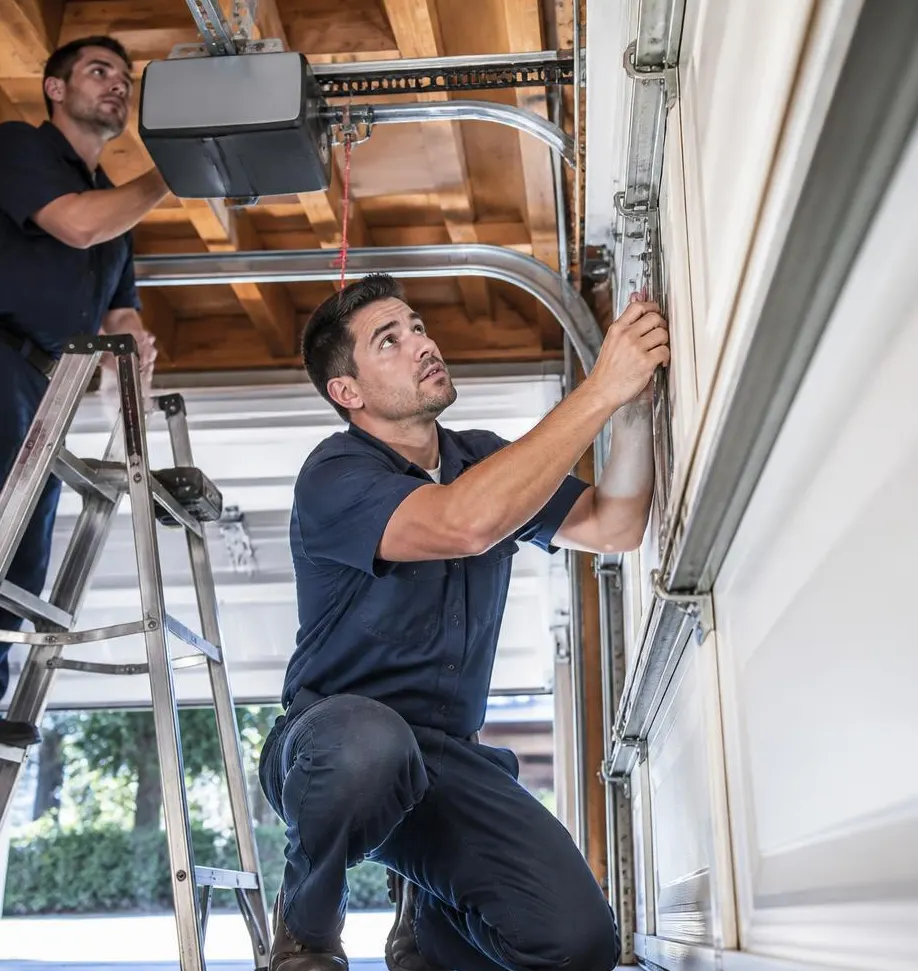
If you're not sure which category your door falls into, a Garage Door Maintenance visit settles the argument fast. We'll check the springs, hardware, bracing, and sensors, tell you plainly what's a safety concern and what's just cosmetic, and handle any needed Garage Door Opener Repair & Installation or spring work without pushing a replacement you don't need. We serve Cape Coral, Fort Myers, North Fort Myers, Lehigh Acres, Estero, Bonita Springs, Pine Island, and Sanibel.
Call Cape Coral Garage & Gate today and get an honest answer on what your older garage door actually needs before the next storm season puts it to the test.