
When the Power Goes Out, Your Garage Door Doesn't Have To Stay Shut
If you live in Cape Coral, you know that power outages are part of life — especially during hurricane season and summer thunderstorms. When the electricity cuts out, one of the first things homeowners realize is that their garage door won't respond to the remote or wall button. If your car is trapped inside or you need access to tools and supplies stored in the garage, this can quickly become a stressful situation.
The good news is that nearly every modern garage door opener has a manual release mechanism that lets you operate the door by hand. Knowing how to use it safely — before an emergency happens — can save you a lot of frustration. Here's everything you need to know about opening your garage door during a power outage and getting your opener back on track once electricity is restored.
How the Emergency Release Works
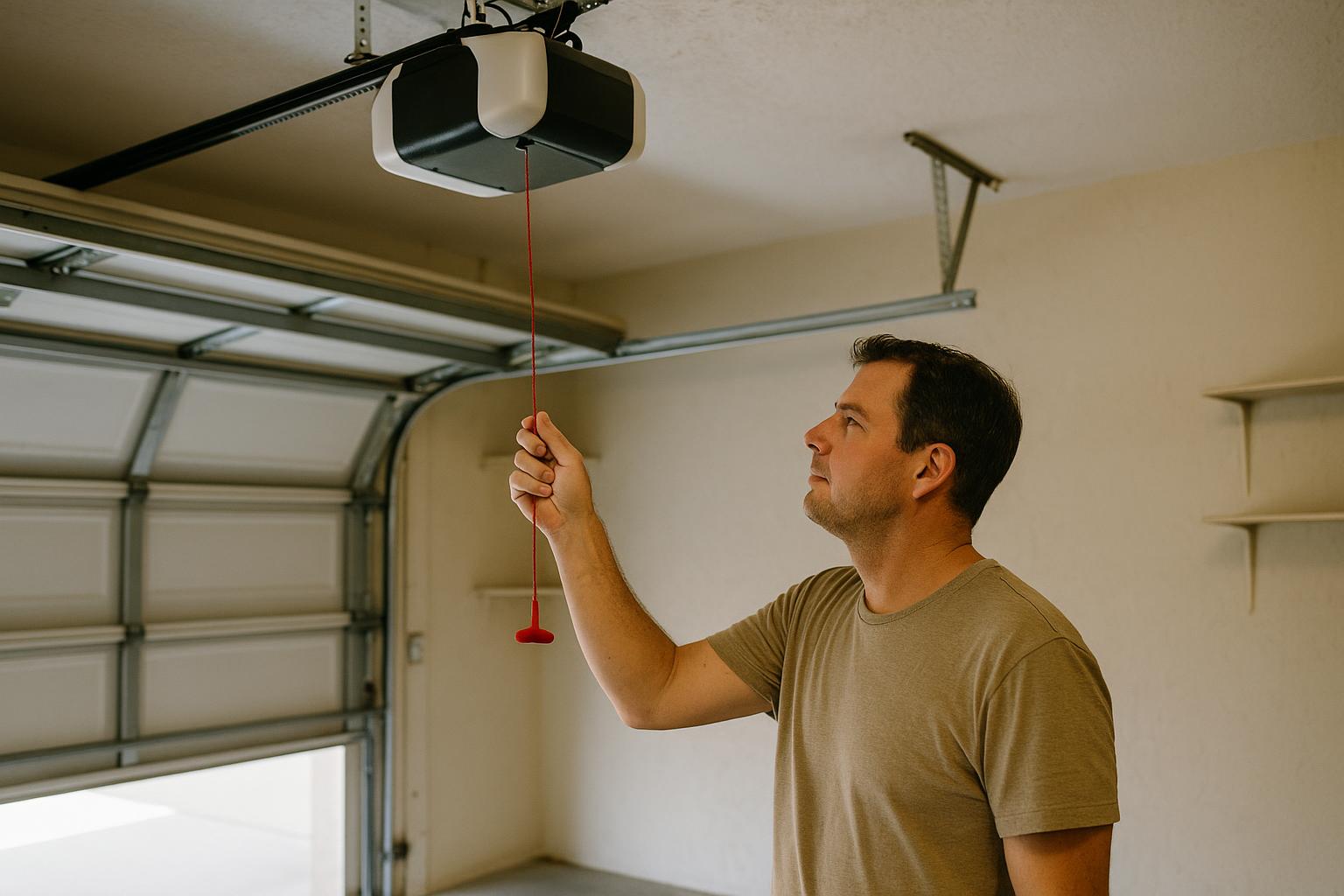
If you look up at the rail that runs along the ceiling of your garage, you'll notice a short rope or cord hanging down, usually with a red handle. This is the emergency release cord, and it's connected to the trolley that moves your garage door up and down along the track.
When you pull this cord, it disconnects the trolley from the opener's drive mechanism. This allows you to slide the door along its track manually, without the motor being involved at all. It's a simple system, but there are a few important safety steps to follow.
Step-by-Step: Manually Opening Your Garage Door
- Make sure the door is fully closed. Never pull the emergency release when the door is partially open. If the springs are worn or broken, the door could come crashing down under its own weight, which is extremely dangerous.
- Pull the emergency release cord. Grip the red handle and pull it down and toward the motor unit. You should hear or feel a click as the trolley disengages from the chain, belt, or screw drive.
- Lift the door manually. Grab the door by the bottom edge or the handles and lift it straight up. A properly balanced garage door with functioning springs should feel relatively light — around 10 to 15 pounds of effort. If it feels extremely heavy, stop and call a professional, because your springs may be failing.
- Secure the door in the open position. If you need to leave the door open, make sure it stays up on its own. If it starts sliding down, use a C-clamp or locking pliers on the track just below one of the rollers to keep it from closing unexpectedly.
- Close it carefully when you're done. Lower the door slowly with both hands. Never let it drop or slam shut, as this can damage the panels, tracks, or weatherstripping.
What to Do When Power Is Restored
Once the electricity comes back on, you'll need to re-engage the opener so your garage door works automatically again. Here's how:
- Pull the emergency release cord toward the door (away from the motor) to reset the trolley into the re-engagement position.
- Press the wall button or remote to activate the opener. The trolley should reconnect to the drive carriage automatically as the motor runs.
- Test the door by opening and closing it a couple of times to make sure everything is working smoothly.
If the door doesn't reconnect or the opener makes unusual grinding or clicking sounds, the trolley or carriage may need adjustment. This is a good time to contact a garage door technician rather than forcing anything.
Common Mistakes to Avoid
While the manual release process is straightforward, homeowners sometimes make mistakes that lead to damage or injury. Here are the most common ones we see from service calls in Cape Coral and the surrounding areas:
- Pulling the release with the door open. As mentioned, this is the most dangerous mistake. A door with weak or broken springs can fall suddenly, potentially causing serious injury or damage to anything underneath it.
- Forcing a stuck door. If the door won't move after you disengage the opener, something else is wrong — a broken spring, a bent track, or a roller that's come off its track. Forcing it will only make the problem worse.
- Leaving the garage unsecured. When the opener is disengaged, the door's built-in lock is the only thing keeping it closed. If your door doesn't have a manual lock, anyone could lift it from outside. During extended outages, consider using a padlock through the track or a slide bolt lock for added security.
- Forgetting to re-engage the opener. After the power comes back, some homeowners continue lifting the door manually for days without realizing the opener is still disengaged. This puts unnecessary wear on the door and leaves your garage less secure.
Preparing Your Garage Door for Storm Season
Power outages caused by tropical storms and hurricanes are a reality of living in Southwest Florida. Beyond knowing how to use the manual release, there are a few things you can do ahead of time to make sure your garage door is ready:
- Test the manual release now. Don't wait for an emergency. Practice disengaging and re-engaging the opener so you're comfortable with the process.
- Schedule a maintenance check. A professional inspection can catch worn springs, frayed cables, misaligned tracks, and other issues that could make manual operation difficult or unsafe when you need it most.
- Consider a battery backup opener. Many modern garage door openers come with built-in battery backup systems that allow the door to operate normally during a power outage. If your current opener doesn't have this feature, upgrading could be a worthwhile investment.
- Install a wind-rated garage door. If your home is in Cape Coral or anywhere along the coast, a wind-rated or hurricane-rated garage door can protect your home from pressure changes and flying debris during a major storm. This is especially important because the garage door is typically the largest opening in your home and a common failure point during high winds.
When to Call a Professional
If you pull the emergency release and the door won't budge, feels dangerously heavy, or makes popping and grinding sounds, don't try to diagnose the problem yourself. Garage door components like torsion springs and cables are under extreme tension and can cause serious injury if handled improperly.
At Cape Coral Garage & Gate, we help homeowners across Cape Coral, Fort Myers, Lehigh Acres, and the rest of Southwest Florida keep their garage doors operating safely year-round. Whether you need a quick repair after a storm, a spring replacement, or a full opener upgrade with battery backup, our team is here to help.
If you want to make sure your garage door is ready for the next power outage or storm season, contact us today to schedule a maintenance inspection. A little preparation now can prevent a lot of headaches later.