
That Frustrating Moment When Your Garage Door Won't Stay Closed
You press the button on your remote, the garage door starts its descent, and then — just before it reaches the floor — it reverses and goes right back up. You try again. Same result. Maybe it works on the third attempt, or maybe it doesn't work at all. Either way, you're left standing in your driveway wondering what went wrong.
This is one of the most common garage door complaints we hear from homeowners in Cape Coral, and the good news is that it's usually fixable. The bad news? Ignoring it can leave your garage — and everything inside it — exposed to weather, pests, and security risks. Let's walk through the most common reasons your garage door reverses before closing and what you can do about each one.
1. Misaligned or Dirty Safety Sensors
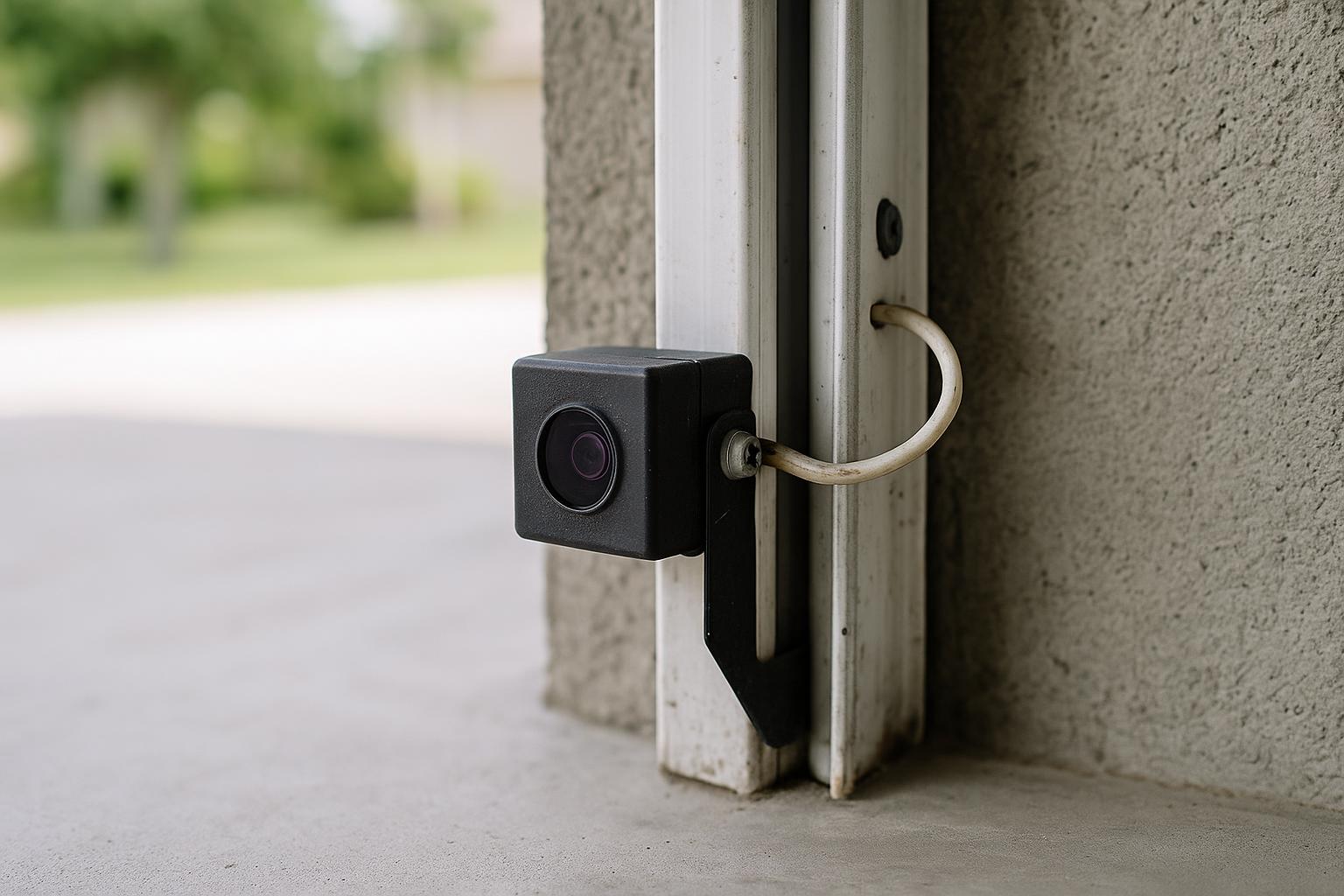
This is the number one cause of a garage door that reverses before reaching the ground. Every modern garage door opener manufactured after 1993 is required to have photo-eye safety sensors installed near the bottom of the door tracks, about six inches off the floor. These sensors send an invisible beam across the opening. If something breaks that beam — a bicycle, a trash can, a child, or even a cobweb — the door is designed to reverse immediately.
Here in Southwest Florida, these sensors take a beating. Dust, humidity, spider webs, and even heavy rain splashing dirt onto the lenses can block the beam and trick the system into thinking there's an obstruction.
What You Can Do
- Wipe both sensor lenses gently with a soft, dry cloth.
- Check that both sensors have a steady light (usually green). A blinking light typically means misalignment.
- Make sure nothing is sitting in the path between the two sensors.
- Inspect the sensor brackets to ensure they haven't been bumped or shifted. Even a slight nudge can throw off the alignment.
If cleaning and realigning doesn't solve the problem, the sensors themselves or their wiring may need to be replaced.
2. Incorrect Close-Limit Settings
Your garage door opener uses limit settings to tell the door how far it needs to travel before it's fully open or fully closed. If the close-limit setting is off, the opener may think the door has hit an obstruction when it reaches the floor, triggering the auto-reverse safety feature.
This issue is especially common after a new opener installation or if someone has recently adjusted the settings. It can also drift over time as components wear.
What You Can Do
- Consult your opener's manual to locate the limit adjustment screws or digital settings. Most openers have two adjustment dials — one for the open limit and one for the close limit.
- Make small adjustments (a quarter turn at a time) to the close-limit setting and test the door after each change.
- If you're not comfortable making these adjustments yourself, a professional technician can calibrate the settings quickly and accurately.
3. Worn or Broken Springs
Garage door springs do the heavy lifting — literally. They counterbalance the weight of the door so the opener doesn't have to work as hard. When a spring is weakened, stretched out, or broken, the door becomes significantly heavier for the opener to manage. The opener may interpret this extra resistance as an obstruction and reverse the door.
Cape Coral's salt air and humidity can accelerate spring corrosion, shortening the typical lifespan of torsion and extension springs. If you notice your door seems sluggish, makes loud groaning noises, or if you can see a visible gap in one of the springs above the door, it's time for a replacement.
Important: Garage door springs are under extreme tension and can cause serious injury if handled improperly. Spring replacement should always be performed by a trained technician.
4. Problems with the Garage Door Tracks
The metal tracks on either side of your garage door guide it as it opens and closes. If a track is bent, warped, or has accumulated debris, the door can bind or stick during its travel. When the opener senses that resistance, it triggers the reversal.
What You Can Do
- Visually inspect both tracks for dents, bends, or gaps where the track meets the brackets.
- Clear away any debris, dirt, or small objects that may have fallen into the tracks.
- Check that the tracks are properly aligned and parallel. You can use a level to verify this.
Minor debris removal is safe to do yourself, but bent tracks should be handled by a professional to avoid further damage to the door or the opening system.
5. Worn Rollers or Hinges
Over time, the rollers that ride inside the tracks can wear down, crack, or seize up. Similarly, hinges connecting the door panels can become stiff or corroded. Both issues create friction that the opener may interpret as resistance from an obstruction.
If you hear grinding, scraping, or squealing sounds when the door moves, worn rollers or hinges are likely contributors. Nylon rollers tend to last longer and operate more quietly than steel rollers, and they're a popular upgrade for homeowners in Cape Coral looking to reduce noise and maintenance.
6. Issues with the Opener Itself
Sometimes the problem isn't mechanical at all — it's the opener's logic board or motor. Electrical surges, which are common during Florida's summer storm season, can damage the circuit board inside your opener. A failing motor may also lack the power to complete the closing cycle, causing the door to stall and reverse.
If you've ruled out the other causes on this list and your opener is more than 10 to 15 years old, it may be time to consider a replacement. Modern openers offer better reliability, quieter operation, smartphone connectivity, and enhanced security features like rolling-code technology.
When to Call a Professional
Some of these fixes — cleaning sensors, clearing track debris, checking for obvious obstructions — are perfectly safe for a handy homeowner to tackle. But several of the issues we've discussed involve high-tension components, electrical systems, or precise calibrations that are best left to experienced technicians.
You should call a professional if:
- Your garage door springs appear damaged or broken.
- The tracks are visibly bent or misaligned.
- You've tried basic troubleshooting and the door still reverses.
- The opener makes unusual sounds, smells like burning, or behaves erratically.
- You're unsure about any adjustment or repair.
At Cape Coral Garage & Gate, we diagnose and repair reversing garage doors every week. Our technicians serve homeowners throughout Cape Coral, Fort Myers, Lehigh Acres, and the surrounding communities, and we carry the parts needed to resolve most issues in a single visit.
Don't Let a Reversing Door Compromise Your Home
A garage door that won't close isn't just an inconvenience — it's a security vulnerability. Your garage likely connects directly to your home and contains valuable tools, vehicles, and equipment. In a climate like ours, an open garage also invites moisture, insects, and wildlife inside.
If your garage door is reversing and you can't pinpoint the cause, reach out to us for a thorough inspection. We'll identify the problem, explain your options, and get your door working reliably again so you can get back to your day.